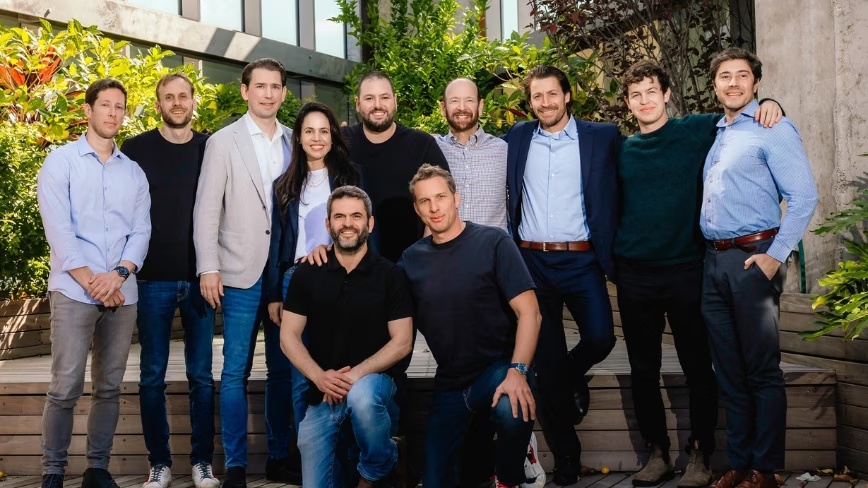
Dream Triples Value to $3 Billion with $260 Million Funding Round
Israeli AI and cybersecurity firm Dream has raised $260 million in a funding round valuing the company at $3 billion, nearly tripling its value in 16 months. The round was led by Bicycle Capital and Group 11, with other notable investors participating. Dream provides national-scale cyber defence services to governments and critical infrastructure operators.
Key points
- Dream, an Israeli AI and cybersecurity firm, has raised $260 million in a funding round valuing the company at $3 billion.
- The round was led by Bicycle Capital and Group 11, with other notable investors participating, including Bain Capital Ventures, Antler, and Tru Arrow Partners.
- Dream provides national-scale cyber defence services to governments and critical infrastructure operators, positioning itself as a vendor for state-level threat landscape.
- The company's valuation has nearly tripled in 16 months, from $1.1 billion in February 2025 to $3 billion in the latest funding round.
- Dream's services target governments and operators of critical infrastructure, such as power grids, water systems, and transport networks.
Dream, an Israeli AI and cybersecurity firm, has made significant strides in the market with its latest funding round. The company has raised $260 million, valuing it at $3 billion, nearly tripling its value in just 16 months. This rapid revaluation highlights the growing demand for defensive AI services, particularly in the national-scale cyber defence sector.
The funding round was led by Bicycle Capital and Group 11, with notable investors Bain Capital Ventures, Antler, and Tru Arrow Partners participating. This follows a previous round led by Bain Capital Ventures, which first lifted Dream into unicorn territory.
Dream's services target governments and operators of critical infrastructure, such as power grids, water systems, and transport networks. The company positions itself as a vendor for the part of the threat landscape where the attacker is often another government, and the buyer is a ministry rather than a chief information security officer.
This development has significant implications for the global cybersecurity landscape, particularly in the context of national-scale cyber defence. As the demand for defensive AI services continues to grow, companies like Dream are poised to play a crucial role in shaping the market.
Sources
The WireByte editorial team synthesises technology news from multiple primary sources, verifies the facts, and links every source. Articles are produced with AI assistance and reviewed under our editorial policy.