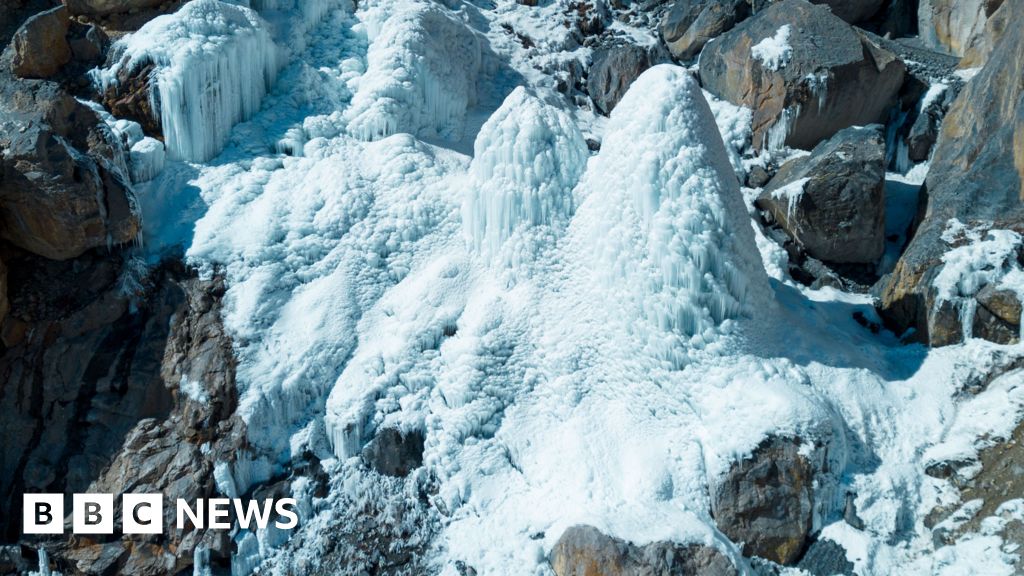
India's Artificial Ice Pyramids Tackle Glacier Retreat
In response to Himalayan glacier retreat due to global warming, artificial ice pyramids have been built in Ladakh's mountain villages to provide a reliable water source for farmers. The pyramids, constructed in the early 2010s, have been successful in securing water for early spring planting, but their long-term sustainability remains uncertain.
Key points
- The Himalayan village of Sakti, Ladakh, has seen a significant decline in water availability due to the disappearance of smaller glaciers.
- Artificial ice pyramids, built in the early 2010s, have been successful in providing a reliable water source for farmers.
- The pyramids are crucial for early spring planting, as the mountain summer is short and crops must be ready before winter hits again.
- The long-term sustainability of the artificial ice pyramids remains uncertain, and their impact on the local ecosystem is still being studied.
Artificial Ice Pyramids in Ladakh's Mountain Villages
In response to the devastating effects of global warming on the Himalayan glaciers, artificial ice pyramids have been built in Ladakh's mountain villages to provide a reliable water source for farmers. The pyramids, constructed in the early 2010s, have been successful in securing water for early spring planting, but their long-term sustainability remains uncertain.
The Problem
The Himalayan village of Sakti, Ladakh, has seen a significant decline in water availability due to the disappearance of smaller glaciers. Global warming has caused the glaciers to retreat, leaving the village with a severe water shortage. Farmers like Gelak Gutme, who has been growing wheat, peas, and potatoes for most of his 65 years, have been struggling to find a reliable source of water.
The Solution
The artificial ice pyramids, built at an altitude of almost 4,000m, have been successful in providing a reliable water source for farmers. The pyramids are crucial for early spring planting, as the mountain summer is short and crops must be ready before winter hits again. The ice pyramids act as a frozen water tower, holding onto water all winter and releasing it right when spring farming begins.
Uncertainty Remains
While the artificial ice pyramids have been successful in providing a reliable water source for farmers, their long-term sustainability remains uncertain. The impact of the pyramids on the local ecosystem is still being studied, and concerns have been raised about the potential environmental consequences of relying on artificial ice pyramids.
Next Steps
As the effects of global warming continue to impact the Himalayan glaciers, the artificial ice pyramids in Ladakh's mountain villages will likely play a crucial role in securing a reliable water source for farmers. However, it is essential to continue studying the long-term sustainability of the pyramids and exploring alternative solutions to address the water shortage in the region.
Sources
The WireByte editorial team synthesises technology news from multiple primary sources, verifies the facts, and links every source. Articles are produced with AI assistance and reviewed under our editorial policy.